



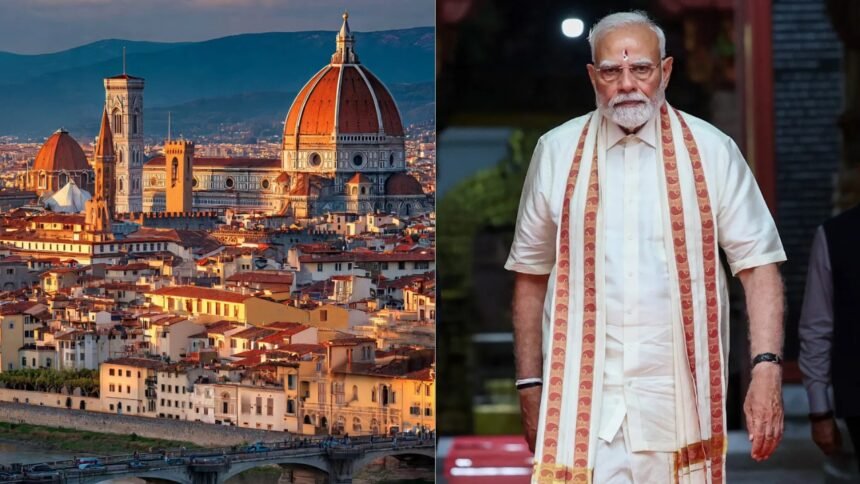
Prime Minister Narendra Modi on Sunday, May 10, 2026, called on citizens to voluntarily reduce overseas travel , postpone destination weddings abroad, and curb non-essential imports as India seeks to shield itself from the economic fallout of the escalating conflict in West Asia.
In a wide-ranging appeal focused on conserving foreign exchange and reducing fuel consumption, the Prime Minister urged citizens to prioritise domestic tourism, increase the use of public transport and electric vehicles, and adopt more economically responsible consumption patterns during the ongoing geopolitical crisis.
“The growing culture of weddings abroad, travelling abroad and vacationing abroad is becoming prevalent among the middle class. We must decide that during this time of crisis, we should postpone travelling abroad for at least a year,” Modi said.
The Context – West Asia Crisis and Economic Fallout
The Prime Minister’s remarks come at a time when the aviation and tourism sectors are already grappling with rising operational costs triggered by the Iran-Israel-US conflict in West Asia, which has:
| Impact | Detail |
|---|---|
| Disrupted air corridors | Longer flight times, route diversions |
| Pushed up crude oil prices | Elevated ATF (aviation turbine fuel) costs |
| Increased fuel surcharges | Higher ticket prices |
| Foreign exchange pressure | Outflows from overseas travel |
The Appeal – Domestic Tourism, Fuel Conservation, Forex
Positioning tourism choices as part of a broader national economic responsibility, Modi stressed that reducing outbound leisure travel would help conserve valuable foreign exchange reserves at a time of heightened global uncertainty.
Key Components of the Appeal
| Area | Recommendation |
|---|---|
| Travel | Postpone overseas leisure travel for at least one year |
| Weddings | Avoid destination weddings abroad |
| Imports | Curb non-essential imports |
| Fuel | Save fuel, use public transport, carpool |
| Vehicles | Increase adoption of electric vehicles |
| Cargo | Greater use of railways |
“Since petrol and diesel have become extremely expensive across the world, it is our responsibility to save fuel and thereby save the foreign exchange spent on purchasing petrol and diesel,” he said.
Market Reaction – Aviation Stocks Fall
The Prime Minister’s remarks triggered an immediate reaction across financial markets, with aviation and travel-related stocks witnessing sharp selling pressure on Monday, May 11, amid concerns that discretionary outbound travel demand could weaken.
| Concern | Impact |
|---|---|
| Prolonged slowdown in international leisure travel | Airlines, online travel companies, outbound tour operators |
| Rising fuel costs | Already under pressure |
| Operational disruptions | West Asia conflict |
Industry Response – Support with Concerns
Industry stakeholders, while backing the Prime Minister’s broader economic message, expressed concerns over the potential impact on employment and businesses dependent on outbound tourism.
Rajiv Mehra, General Secretary, FAITH
“We wholeheartedly endorse the sentiment behind the Prime Minister’s appeal urging Indians to reduce leisure travel abroad and avoid holding weddings overseas.”
However, Mehra stressed that while reducing outbound expenditure may help conserve foreign exchange, India must simultaneously focus on significantly increasing inbound tourism earnings.
“It is unfortunate that a country blessed with immense natural beauty, cultural richness, spirituality and world-class historical monuments attracts only around two crore foreign tourists annually. India has the potential to emerge as one of the world’s leading tourism destinations.”
Rohit Kohli, Joint MD, Creative Travel Family of Brands
“Tourism globally is a major driver of foreign exchange, employment and GDP growth, yet India continues to underinvest in destination development, tourism infrastructure and international promotion.”
Outbound Tour Operators Association of India (OTOAI)
“Tourism is among the first sectors to be hit and, unfortunately, among the last to recover.”
OTOAI stated that while the Prime Minister’s appeal was made in the national interest, it could have a “significant impact on the outbound travel community,” particularly thousands of travel professionals, agents, and allied service providers.
The association plans to seek an audience with the Prime Minister’s Office to present concerns.
KB Kachru, President, Hotel Association of India
“This sentiment has the ability to accelerate a measurable boost in domestic consumption and presents a huge opportunity for India’s tourism and hospitality sector.”
Aviation Sector Already Under Pressure
India’s aviation sector has been witnessing cascading effects from the West Asia crisis over the past several months:
| Impact | Detail |
|---|---|
| Rerouted flights | Europe and North America routes affected |
| Longer flight durations | Higher fuel burn |
| Increased surcharges | Fuel surcharge on international tickets |
| Elevated airfares | Expected to remain high in near term |
Potential Winners and Losers
| Sector | Potential Impact |
|---|---|
| Outbound tour operators | Negative (reduced demand) |
| Airlines (international routes) | Negative (softening demand) |
| Domestic airlines | Neutral to positive (shift to domestic) |
| Domestic hotels and resorts | Positive (increased domestic tourism) |
| Wedding venues in India | Positive (shift from destination weddings abroad) |
| Rail travel | Positive (fuel-efficient alternative) |
The Long-Term Opportunity – Building Domestic Tourism
Industry leaders emphasized that the appeal should be accompanied by policy support for domestic tourism:
| Recommendation | Purpose |
|---|---|
| Sustainable infrastructure | Address over-tourism in popular destinations |
| Improve connectivity | Tier-II and tier-III destinations |
| Develop new tourism circuits | Spread demand |
| International promotion | Increase inbound tourism |
| Recognise tourism as strategic sector | Policy and investment focus |
What Happens Next?
| Action | Timeline |
|---|---|
| Consumer sentiment shift | Short-term uncertainty |
| Outbound demand softening | Coming quarters |
| Domestic booking increase | Potentially immediate |
| OTOAI seeking PMO meeting | Soon |
| Policy response | TBD |
A Delicate Balance
Prime Minister Modi’s appeal to reduce overseas leisure travel for at least a year – made amid the West Asia crisis, rising fuel costs, and foreign exchange pressures – has sent ripples through India’s tourism and aviation sectors.
The industry supports the sentiment but fears job losses and business closures in the outbound travel ecosystem. Aviation stocks fell. Domestic hoteliers see an opportunity.
The government’s challenge: balance national economic interests with the livelihoods of thousands of travel professionals.
As FAITH’s Rajiv Mehra noted, India must also focus on earning foreign exchange through inbound tourism – a vastly underutilized opportunity for a country with India’s cultural and natural assets.
The coming months will reveal whether Indian consumers voluntarily postpone their international vacations – and whether domestic tourism can absorb the shift.