





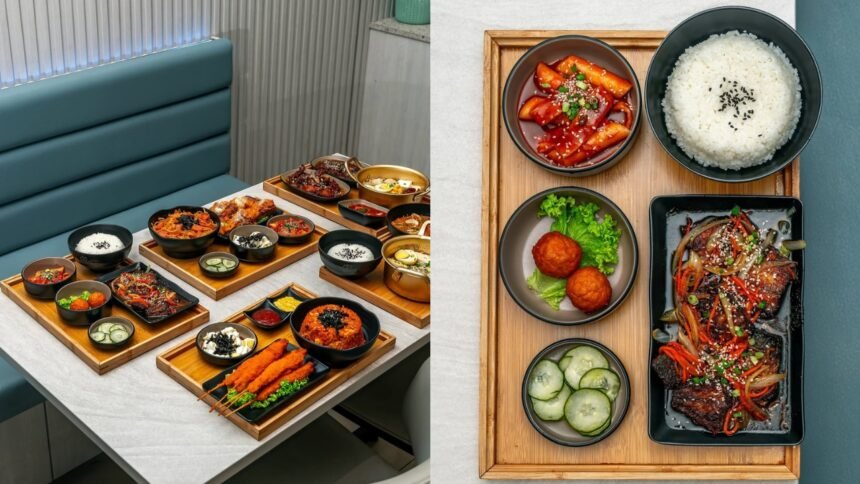
The Unwritten Rules of Korean Food Pairings are deeply rooted in Korea’s culinary identity, where food is not just about taste but about harmony, balance and shared experience. Korean cuisine blends spicy, sweet, savoury and fermented flavors in ways that feel natural to locals but fascinating to outsiders.
These pairings are often considered “sacred” because they’ve been perfected over generations. Whether you’re eating at a street stall, a barbecue restaurant or a convenience store, these combinations are followed almost instinctively.
Here’s a detailed breakdown of Korea’s most iconic food pairings and why they work so perfectly.
1. Tteokbokki + Soondae
Street Food Perfection Through Texture Contrast

One of the most beloved street food combinations follows a simple rule: pair chewy with crunchy and spicy with savoury.
Tteokbokki (spicy rice cakes) is soft, chewy and coated in a sweet-spicy gochujang sauce. Soondae (Korean blood sausage), along with fried snacks and gimbap, adds richness, saltiness and texture.
Why It Works
- Chewy rice cakes contrast with dense sausage texture
- Sweet-spicy sauce enhances savoury flavors
- Dipping creates a unified taste experience
- Multiple textures in one bite make it satisfying
This pairing is a staple at bunshik stalls and perfectly represents Korea’s love for layered textures.
2. Korean Fried Chicken + Beer (Chimaek)
The National Comfort Combo

Known as chimaek, this pairing is one of the most famous examples of the Unwritten Rules of Korean Food Pairings.
Why It Works
- Beer cuts through the oiliness of fried chicken
- Light lagers refresh the palate
- Pickled radish adds acidity and balance
- Enhances social drinking culture
This combination became hugely popular during the 2002 FIFA World Cup and is now a national favorite.
3. Jeon + Makgeolli (Especially on Rainy Days)
A Pairing Driven by Emotion and Atmosphere

A unique aspect of Korean dining is pairing food not just with flavors, but with weather and mood.
Jeon (savory pancakes) paired with makgeolli (rice wine) is especially popular during rainy days.
Why It Works
- The frying sound of jeon resembles rainfall
- Makgeolli’s light fizz balances oiliness
- Warm food + fermented drink creates comfort
- Emotional nostalgia enhances the experience
This pairing shows how Korean food culture connects deeply with environment and feelings.
4. Galbi + Naengmyeon
Hot Meets Cold in Perfect Balance

Grilled meat (galbi) is often paired with naengmyeon (cold noodles), especially in summer.
Why It Works
- Cold noodles refresh after hot grilled meat
- Vinegar-based broth cleanses the palate
- Balances heavy and light elements
- Reduces heat from both weather and grill
Some eat naengmyeon alongside BBQ, while others prefer it as a finishing dish.
5. Instant Ramen + Gimbap
Korea’s Everyday Comfort Pairing

This pairing is as common in Korea as tea and biscuits elsewhere.
Why It Works
- Spicy ramen contrasts with fresh gimbap
- Portable and affordable meal
- Balanced combination of carbs, protein and vegetables
- Ideal for quick meals
It’s especially popular among students and office workers.
6. Korean Chinese Noodles + Tangsuyuk
The Mandatory Restaurant Combo

In Korean-Chinese cuisine (joongshik), noodles are almost always paired with tangsuyuk (sweet and sour fried meat).
Why It Works
- Crispy meat contrasts with soft noodles
- Sweet-sour sauce balances savory dishes
- Shared dining enhances the experience
- Completes the meal
There’s even a debate: pour sauce or dip? Both are accepted traditions.
7. Seolleongtang + Kkakdugi
The Ultimate Hangover Cure
This pairing is a classic example of balance in Korean cuisine.
Why It Works
- Mild soup allows customization
- Kkakdugi adds acidity and crunch
- Fermentation boosts flavor depth
- Restores energy after drinking
Adding kimchi broth to the soup is a popular insider trick.
8. Korean BBQ + Soup
The Rule That Completes Every Meal

In Korea, no meal is complete without soup — especially Korean barbecue.
Why It Works
- Soup balances grilled meat richness
- Adds warmth and depth
- Helps digestion
- Completes the dining experience
Mixing rice into the soup at the end is considered the perfect finishing move.
The Philosophy Behind These Pairings
The Unwritten Rules of Korean Food Pairings are built on key principles:
- Balance of flavors (spicy, sweet, sour, salty)
- Texture contrast (crispy, chewy, soft)
- Temperature harmony (hot vs cold)
- Fermentation for depth and digestion
- Social dining through shared dishes
These principles ensure every meal feels complete, not overwhelming.
Korean Food Pairings Are a Cultural Language
The Unwritten Rules of Korean Food Pairings go far beyond simple combinations — they represent a cultural system where food, emotion and environment come together.
From chimaek nights and rainy-day pancakes to barbecue feasts and street food snacks, every pairing tells a story about how Koreans experience food.
Understanding these combinations doesn’t just improve your meal — it helps you experience Korean culture the way locals do: balanced, shared and deeply satisfying.